Swim Team 101
Swim parents don't need a PhD in competitive swim to support their swimmers, but knowing a little bit about how swim meets run can help parents know what to expect at meets, what to bring for comfort, and enjoy the season a little more. There's probably nothing here that you wouldn't pick up for a season or two of attending our meets, but we've gathered some informational resources that we hope will accelerate your introduction to summer rec. ;-)
The Season At-A-Glance
Practices: We start summer practice in April. During the school year, we practice in the afternoon (after school). During the summer, we practice in the morning. See the practice schedule for details.
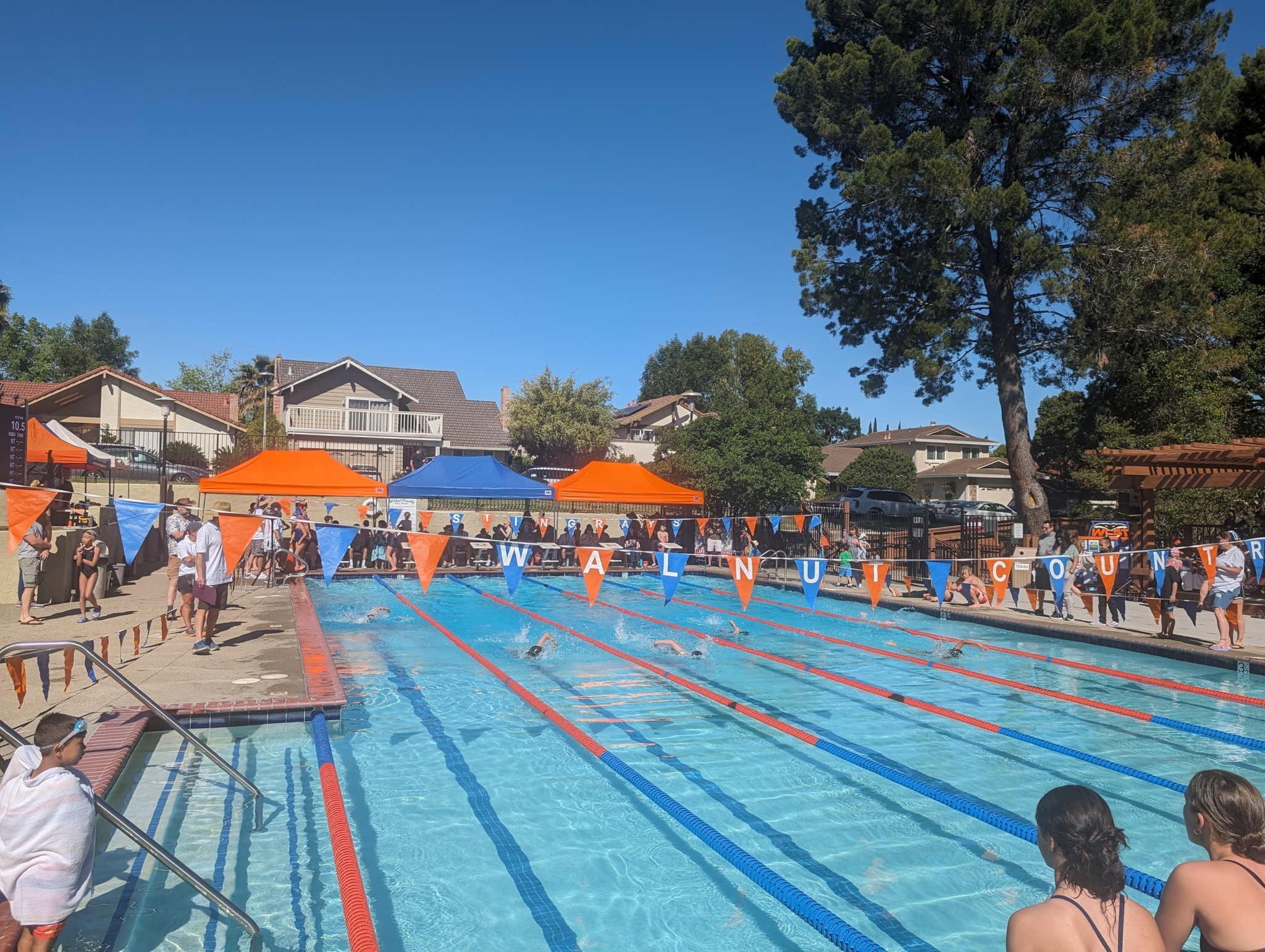
Time Trials: In May, at the start of the competition season, we have a meet just for our team swimmers called Time Trials to establish baseline swim times for each of the swimmers in all of the individual events. Swimmers not yet proficient at all four strokes swim as many of the individual events as they're able to (they can have their baseline swim as late in the season as they need to; it doesn't have to happen at Time Trials). The idea is to record times early in the competition season that the swimmers will work to improve on through the season. We run Time Trials just like a regular meet, with timers, stroke & turn officials, data desk, announcers, and Stingray Cafe. It's a great way for the team to rehearse hosting our home meets.
Dual Meets: Friendly competition with another team, hosted at our pool or the other team's pool. Dual meets are single-day events (usually a Wednesday evening, or a Sat. morning). Most of our meets are dual meets.
IMPORTANT - For dual and tri-meets, swimmers are assumed to be participating, so if you forget to declare your swimmer (that is, you don't do the online sign up to confirm that they'll be attending the meet), they can still come to the meet and swim. But you should still declare for the meets that you know that you will attend because the coaches will preference swimmers who have confirmed that they're coming to the meet over those who haven't, when selecting swimmers for the relay teams. It's a real heart-breaker for the swimmers who show up for a relay to miss it because one of the relay swimmers didn't show.
Tri-Meets: Just like a dual meet, but we swim with two other small teams in a single meet. It's a great way to swim with more teams without adding more meets to the schedule. Depending on how the host team runs the meet, tri-meets might be scored as a single meet for all three teams, or as three separate dual meets: Host Team vs. Visiting Team A, Host Team vs. Visiting Team B, and Visiting Team A vs. Visiting Team B.
Invitationals: Invitationals are larger meets (usually the host team plus 4 or more visiting teams) and they may be scheduled over two or three days. Many of the local teams have a signature invitational: the Crossings Challenge is ours. It's a fast, fun, multi-day meet that takes our whole team to pull off. Even at our capacity of ~600 swimmers, we're not able to accommodate all the teams that want to participate in this institution of South Concord summer rec. swim.
Events
Our meets have events for each age group / competition category (e.g., Girls 6 & Under, Boys 6 & Under, Girls 7-8, Boys 7-8, etc.) THE FOUR COMPETITIVE STROKES (1) Freestyle; (2) Backstroke; (3) Breaststroke; (4) Butterfly.
In freestyle events, the competitor may swim any stroke. The stroke most commonly used is sometimes called the crawl, which is characterized by the alternate stroking of the arms over the water surface and an alternating (up and down) flutter kick. On turns and finishes, some part of the swimmer must touch the wall. Most swimmers do a flip turn.
Backstroke consists of an alternating motion of the arms with a flutter kick while on the back. On turns, swimmers may rotate to the stomach and perform a flip turn and some part of the swimmer must touch the wall. The swimmer must finish on the back.
The breaststroke, which is the oldest stroke dating back hundreds of years, requires simultaneous movements of the arms on the same horizontal plane. The hands are pressed out from in front of the breast in a heart shaped pattern and recovered under or on the surface of the water. The kick is a simultaneous somewhat circular motion similar to the action of a frog. On turns and at the finish, the swimmer must touch the wall with both hands simultaneously at, above or below the water surface.
Some consider the butterfly to be the most beautiful of the strokes. It features a simultaneous recovery of the arms over the water combined with an undulating dolphin kick. In the kick, the swimmer must keep both legs together and may not flutter, scissors or use the breaststroke kick. Both hands must touch the wall simultaneously on the turns and the finish. (The butterfly is the newest stroke and was developed in the early 1950s as a variation of the breaststroke. It became an Olympic stroke in 1956 in Melbourne.)
The individual medley, commonly referred to as the I.M., features all four strokes. In the IM, the swimmer begins with the butterfly, then changes after one fourth of the race to backstroke, then breaststroke and finally freestyle. In the medley relay, all four strokes are swum. The first swimmer swims backstroke, the second breaststroke, the third butterfly, and the final swimmer anchors the relay with freestyle.
The freestyle relay events consist of four freestylers, each swimming one-quarter of the total distance of the event.
Events are held in all of the competitive strokes at varying distances depending on the age-group of the swimmer. Our 7-8s and under swim 25 yard events (the length of the main pool). Our 9-10s through 13-14s swim 50 yard events (they'll get lots of practice with their turns). 15-18s swim mostly 100 yard events. the distance is In addition, there is a combination of the strokes swum by one swimmer called the individual medley. Other swimming events include relays, which are a group of four swimmers who either all swim freestyle (freestyle relay) or each swim one of the competitive strokes in the order of backstroke, breaststroke, butterfly and freestyle (medley relay).
Swim Meets
1. What To Bring to A Meet
- Swim suit, team swim cap, and googles
- some swimmers use talcum powder to "dust" the inside of the swim cap to keep it from sticking to itself and makes it easier to put on the next time
- Towel for drying off (probably wise to pack 2 towels)
- something to sit on other than the ground . . .Blanket, chairs, etc
- during colder weather, bring a swim parka or sweatshirt
- Sharpie to mark your swimmer's shoulder so that they can easily be identified and so that they know what events they are swimming in
- Always bring water to drink unless you plan to purchase from the snack shack
- healthy snacks and fruit are good to have on hand in case your swimmer gets hungry, but if you forget, we typically have your needs covered by visiting the snack shack
- for younger swimmers, bring games, activities, coloring books to keep them busy in between swim events
2. How To Mark Your Swimmers for a Meet
- you will be given specific guidance on how to do this for different types of meets
- usually, you will want to use a black sharpie and mark the following information of your swimmer's right shoulder and right forearm. You will find this information on the event meet sheet that is emailed out to you before the event.
- First name, Last name
- Event # Heat # Lane # Event Description
How To Read a Heat Sheet
This is an example of 5 races that you might see on a meet entry sheet for your swimmers. Knowing how to read this will help you and your swimmer to know when they have an event coming up, and where they will be swimming in that event.

Event # Heat/Lane Event Description (order) for relays
# 9 Heat 1 / Lane 3 200 Medley Relay
ABOUT SWIM MEETS:
Swim meets are a great family experience! They're a place where the whole family can spend time together. Listed below are some very in-depth guidelines geared to help you through your first couple of swim meets. It may seem a little overwhelming, but we tried to be as specific and as detailed as we possibly could. If you have any questions, please ask your coach.
BEFORE THE MEET STARTS
- Arrive at the pool at least 15 minutes before the scheduled warm-up time begins. This time will be listed in the meet information emailed out to all Team Triumph swimmers.
- Upon arrival, find a place to put your swimmer's blankets, swim bags and/or sleeping bags. The team usually sits in one place together, so look for some familiar faces.
- Once "checked in", write each event-number on your swimmer's hand in ink. This helps him/her remember what events he/she is swimming and what event number to listen for.
- Your swimmer now gets his/her cap and goggles and reports to the pool and/or coach for warm-up instructions. It is very important for all swimmers to warm-up with the team. Swimmer's bodies are just like cars on a cold day-he/she needs to get the engine going and warmed-up before he/she can go all out.
- After warm-up, your swimmer will go back to the area where his/her towels are and sit there until the next event is called. This is a good time to make sure he/she goes to the bathroom if necessary, gets a drink, or just gets settled in.
- The meet will usually start about 10-15 minutes after warm-ups are over.
- According to USS rules (because of insurance purposes), parents are not allowed on deck unless they are serving in an official capacity. Similarly, all questions concerning meet results, an officiating call, or the conduct of a meet, should be referred to the coaching staff. They, in turn, will pursue the matter through the proper channels.
- Heat Sheets. A heat sheet is usually available for sale in the lobby or concession area of the pool. Heat sheets generally sell for one to two dollars per day. It lists all swimmers in each event in order of "seed time". When the team entry is sent in, each swimmer and his/her previous best time in that event is listed. If the swimmer is swimming an event for the first time, he/she will be entered as a "no-time" or "NT". A "no-time" swimmer will most likely swim in one of the first heats of the event.
MEET STARTS:
- It is important for any swimmer to know what event numbers he/she is swimming (again, why they should have the numbers on their hand). He/she may swim right away after warm-up or they may have to wait awhile.
- A swimmer's event number will be called, usually over the loudspeaker, and he/she will be asked to report to their lane. Swimmers should report with his/her cap and goggle. Generally, girls events are odd-numbered and boys events are even- numbered. You can expect at least 4-8 heats of each event.
- The swimmer swims their race.
- After each swim:
A. He/she is to ask the timers (people behind the blocks at each lane) his/her time.
B. He/she should go immediately to their coach. The coach will ask him/her their time and discuss the swim with each swimmer.
C. Generally, the coach follows these guidelines when discussing swims:
Positive comments or praise
Suggestions for improvement
5. Things you, as a parent, can do after each swim:
Tell him/her how great they did! The coaching staff will be sure to discuss stroke technique with them. You need to tell him/her how proud you are and what a great job he/she did.
Take him/her back to the towel area and relax.
This is another good time to check out the bathrooms, get a drink or something light to eat.
The swimmer now waits until his/her next event is called and starts the procedure again. When a swimmer has completed all of his/her events he/she and their parents get to go home. Make sure, however, you, as a parent, check with the coach before leaving to make sure your swimmer is not included on a relay. It is not fair to other swimmers who may have stayed to swim on a relay where your swimmer is expected to be a member and he/she is not there. (The coaches speak from experience on this issue).
What Happens If Your Child has a Disappointing Swim?
If your child has a poor race and comes out of it feeling bad, talk about the good things. The first thing you say is, "Hey, that is not like you. You're usually a top swimmer." Then you can go on and talk about the good things the child did. You never talk about the negative things.
If your child comes up to you and says, "That was a bad race, don't tell me it wasn't," there is nothing wrong with a swimmer negatively evaluating a race. The important thing is for the child not to dwell on it. You should move the swimmer on to something good. "All right, you have had a bad race. How do you think you can do better next time?" Immediately start talking about the positive things.
Nutrition for Swimming
Everything you do influences your performance, but your food choices have the most effect due to the long term and short-term benefits. A proper diet, including proper selection of foods, will help your training and performance while also achieving a healthy lifestyle once you stop competing.
To help ensure a balanced diet, remember that there are no magical nutrition remedies. So forget the fads and eat a variety of wholesome foods from the four food groups--milk, meat, fruits & vegetables, and grains. Foods in these groups provide protein, fat carbohydrate, fiber and all the necessary vitamins and minerals. Your ideal diet should include the following percentage of calories:
Carbohydrate 50-60%
Fat 20-30%
Protein 14-18%
Common Swim Team Terms
Being on a swim team is just like being on any recreational team in that the sooner you learn and master the "lengo", the sooner you will fit in and fully understand how things work and you will be able to help your swimmer get the most out of the program.
Here are a number of Common swim words that you and your swimmer should know.
Swim stroke
Popped time
Freestyle
Backstroke
Backstroke flags
Backstroke Count
Scissor Kick
Dolphin Kick
Butterfly or Fly
Side breathing
Individual Medley or IM
Dual Meet
Tri Meet
Split time
Flip turn
Two-hand touch
Personal Best
Short course
Long Course
Invitational
Dive Start
VOLUNTEER JOBS
Being part of a recreational swim team does require parent involvement. The swim meets can't run without help and support from our parents in the form of volunteer jobs. The team will announce to the swim families how many jobs each family is required to perform to meet your family job requirement. There are 3 different groups of families, and each group has a different jobs requirement.
Little Ray Family - a family who only has a Little Ray swimmer registered on the team, and has no other swimmers registered on the team of any other age group
15-18 family - a family who only has swimmer age 15-18 years old and does not have any other swimmer of any other age
6-14 Family - everyone else, families who have a registered swimmer age 6-14 years old, or families who have multiple swimmers
Families will be able to sign up for their season jobs on the website. You will recieve announcement from your Meet Director letting you know when you are able to sign up for jobs. All families have to perform a combination of jobs at both our regular swim meets, and also at our large Crossing Challenge Invitational meet. Crossings Challenge is an "all-hands-on-deck" event, so everyone will need to pitch in and help out. Families can sign up for a variety of different volunteer jobs. Some jobs may require a bit more knowledge and training, but all of the volunteer jobs are very easy to learn.
VOLUNTEER JOB DESCRIPTIONS
LEVEL 1 jobs - anyone can perform these jobs with very little advanced knowledge or training
Lane Timer - as a timer you will be sitting behind the starting blocks with a timing button. You will press the button when the swimmer in your lane touches the wall to end their race. Lane timer shifts typically run the entire duration of the swim meet for Wed and Sat dual meets. The jobs are typically broken up into shifts for Invitationals.
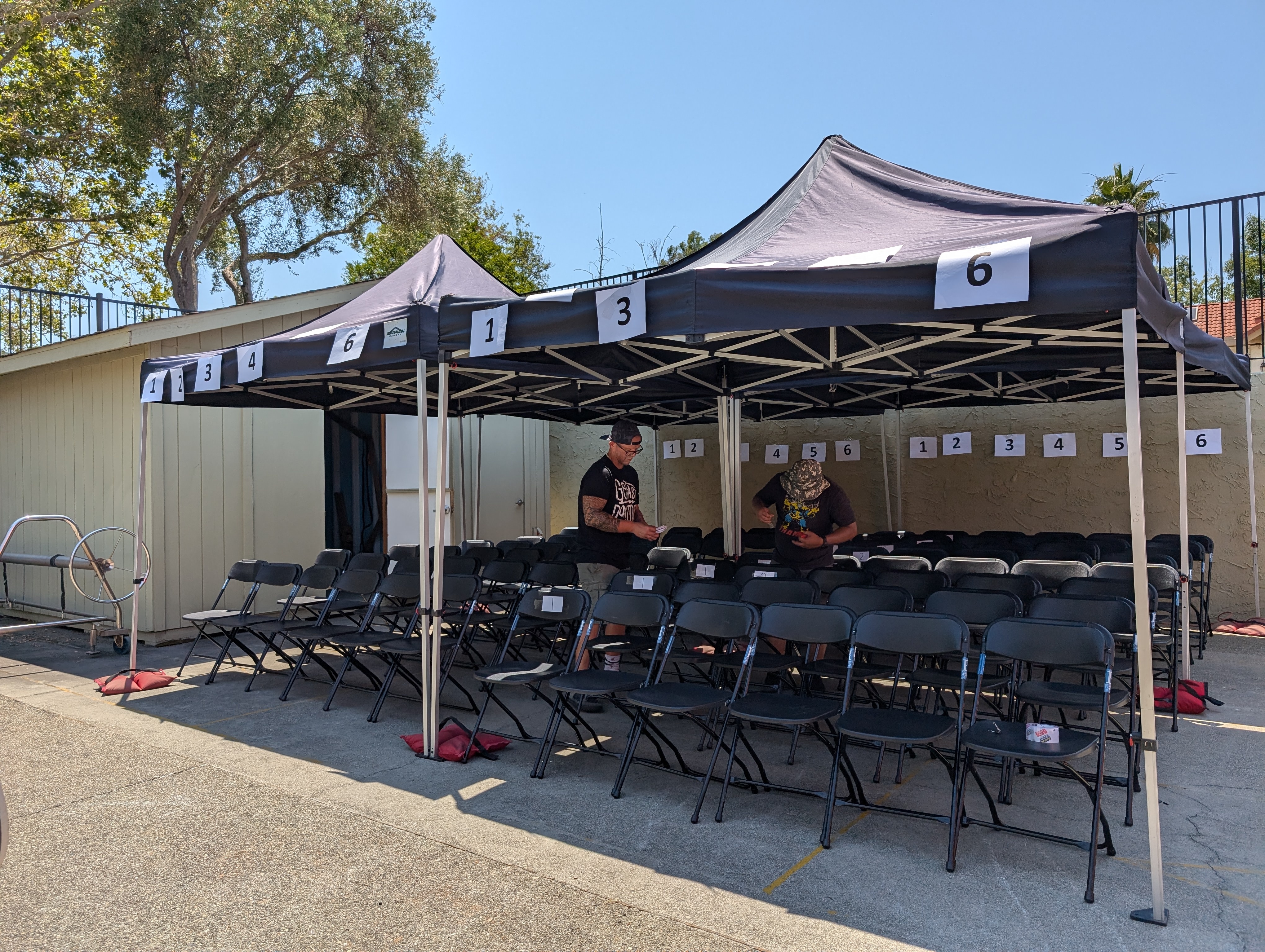
Setup / Takedown - This job is 2 parts. The setup job arrives early and helps to set up the pool equipment for the swim event. This may include setting up pop-up tents, tables, chairs, LED scoreboard, data desk, starting blocks, audio equipment, lane ropes, backstroke flags, sponsor banners, roping off the kid pool, roping off the S&T lane judging area, etc. At the end of the swim meet, the take down job is to put all of the equipment away back in storage. There is no part of this job that is actually performed during the actual swim meet.
Snack Shack - (home meets only) this job is working in the Stingray cafe as a helper. You may be asked to serve food, handle cash, process credit cards/VENMO, set out / replace condiments, prepare food, cook food, and assist in the cleanup of the Cafe at the end of the swim event. This job typically lasts the duration of the swim meet
Barbeque Griller - (home meets only) this job is responsible for cooking our grill food items such as burgers, hotdogs, quesadillas, etc This job typically lasts the duration of the swim meet
Concessions - (home meet only) this job will be handling cash and processing payment while selling candy, snacks, apparel, etc This job typically lasts the duration of the swim meet.
Data Runner - you are responsible for picking up the DQ slips from the S&T judges and delivering them to the Data Desk for processing. You are also responsible for picking up the swim sheets from the Lane Timers and delivering them to the Data Desk for processing. This job typically lasts the duration of the swim meet
Marshall - Marshalls work in a team of 2 or 3. This job is the shepherd for the younger swimmers (Little Rays, 6&unders). You will need to identify and locate the younger swimmers prior to their race, and then stage them in the Marshall staging area so that they are all together organized by their event and heat. Marshalls will then escort the swimmers in order up to the starting blocks area and make sure they are ready to go when their event is called. This job typically lasts the duration of the swim meet
Ribbons / Floater - this is a 2 part job. Ribbons is how the swimmers are rewarded for their participation and performance in the pool. Your jobs is to retrieve the ribbons stickers from the Data Team, and then place the sticker on the cardboard tab on the appropriate ribbon for that swimmer based on how they finished their race. This jobs typically starts about 60 - 90 mins after the event started, and typically requires you to stay 15 - 20 mins after the event ends to finish all of the ribbons and place them into the proper family folder.
LEVEL 2 JOBS - some training is required to be able to perform these jobs. Volunteers who sign up for these jobs are required to perform fewer season jobs
Stoke & Turn Judge - a S&T judge is the sideline referee for the swim meet. This is a great job if you enjoy being front and center to be able to watch your swimmer in the water. This job does require you to attend a brief training that takes place on a Saturday morning before the season begins. A S&T judge is looking for proper swim technique and is filling out a "Disqualification" DQ slip if a swimmer is observed not swimming with the proper technique. S&T jobs are typically set up in shifts, so your job may not be as long, but the actual time when you perform you job is determined on the day of the meet. Your lunch/dinner is usually provided to you at no charge.
Head Ref & Race Starter - (only home meets) the Head Referee and Starter are the pulse of the swim event. The Ref is calling the race events, bringing the swimmers to the starting blocks, and the Starter is operating the microphone and starter horn to signal the start of a race. These two officials are also looking for false starts, early take-offs, and ensuring that the swimmers are in the correct event. These jobs are typically done in shifts and often rotate. Volunteers who perform Starter and Ref jobs are required to perform fewer season jobs and your lunch/dinner is usually provided to you at no charge.
CROSSING CHALLENGE JOBS - CC jobs are typically broken up into shifts
Booster Asst - you are working with the Team Boosters as an assistant and performing a variety of tasks to help them during the meet.
Head Clerk of the Course - typically the Head Clerk is managing the front entrance of our event staging area. You are responsible for getting swimmers into the clerk and maintaining organization and efficiency as the swimmers get staged and prepare to head to the starting blocks for their race.
Clerk of Course Assistant - you are working in a group of 7 or 8 assistants to organize and stage the swimmers by event and heat within the Clerk and prepare them for the time when they head to the starting blocks.
Hospitality - you are responsible for grabbing snack, water, and Gatorade and bringing refreshments to the Coaches, Lane Timers, Referee, Starter and Stoke & Turn Judges.
Kitchen Support - you are working in the Stingray Cafe kitchen prepping food, serving food, processing payments, cleaning, organizing, etc
Snack Shack Food Prep - typically this job is performed the day before or early on the 1st day of Crossings Challenge. Your job will be mostly organization, setup, and food prep getting things ready to serve food out of the Stingray Cafe
Parking Control - you are stationed at the front of the entrance to S Larwin Ave and tasked with keeping unauthorized vehicles from entering the parking area where the vendors, coaches, and staff will need to be parking